
KIDDO Gippsland: Building Physical Literacy and Wellbeing in Children

KIDDO Gippsland is a physical literacy program designed for children aged 2 to 8 years, aimed at developing the essential movement skills, motivation, and confidence needed for lifelong physical activity. Early childhood is a critical period for establishing these foundations, and KIDDO seeks to instil a love of movement that will benefit participants well into adulthood.

Supported by world-class exercise and sports science research from The University of Western Australia, KIDDO Gippsland employs proven methods to assess the development of fundamental movement skills. However, to fully understand the broader effects on participants’ health and wellbeing, a more comprehensive evaluation was necessary.

In November 2023, GippSport partnered with the Australian Social Value Bank (ASVB) to measure the true social impact of KIDDO Gippsland. This data not only strengthens our reporting but also enhances decision-making for future resource allocation, contributing to a healthier and more active Gippsland.
Demonstrating Social Value with ASVB

To quantify the social value of KIDDO Gippsland, we used the ASVB framework. ASVB provides an economic valuation of improvements in wellbeing, translating social outcomes into monetary terms. This process allows us to estimate the tangible benefits of our program in a way that can be understood by stakeholders and funders alike.

ASVB’s approach uses data from the Household, Income and Labour Dynamics in Australia (HILDA) survey, comparing the responses of KIDDO participants with those from the broader Australian population. This comparison results in a wellbeing valuation, offering a clear indication of how KIDDO Gippsland improves participants’ quality of life.

Through this process, we quantified two types of social benefits:

Primary values: Direct benefit and value to participants of improved wellbeing.

Secondary values: The wider benefit and value to society including government.

By using this data-driven approach, we can more accurately demonstrate the significant social impact of KIDDO Gippsland, supporting informed decisions around resource allocation and future program development.

The Process

As part of our journey to assess social impact, we worked closely with ASVB to create our first impact report. KIDDO Gippsland was the initial program chosen for evaluation, specifically looking at the period funded through VicHealth’s Jumpstart initiative. This focused on early years participants, allowing us to measure outcomes tied to a specific funding amount and time frame.

With KIDDO’s foundation in the four pillars of physical literacy—physical, social, cognitive, and psychological—we were able to explore multiple areas of impact:

Physical benefits: Measured through participation in KIDDO’s 45-minute structured program, with activities to encourage movement the primary focus.

Social benefits: Demonstrated by participants’ regular social interaction. The program’s design fosters weekly social connections, with children becoming active members of their peer group.

Confidence improvements: Although a core aim of KIDDO, we opted not to include this outcome in our report due to a lack of sufficient data captured to evidence the benefit generated.

During the funding period, 1,006 participants engaged with the KIDDO program. After factoring in both the initial funding received and our operational costs, we were able to calculate the overall social impact.

Guiding Principles

  • We based our data on a three-month period, aligned with the typical school term and average length of time participants remained in our program.
  • While ASVB’s youngest data category starts at age 16, we conservatively applied this to our participants, recognising that it may understate the benefits for younger children.
  • Physical benefit is based on a 45-minute energetic program, meaning participants would only require an additional 15 minutes of energetic play throughout the day to meet the guidelines from the Australian Government.
  • We acknowledge that the participants may be involved in other physical activity throughout the week, which may or may not be linked to skill development.

The Results

By using the Australian Social Value Bank (ASVB), we demonstrated that KIDDO Gippsland delivers significant value to the community. The key results are as follows:

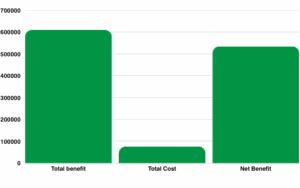
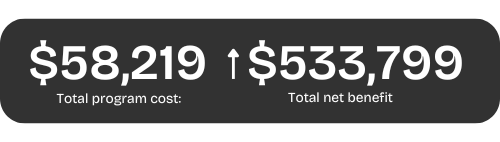
With a total program cost of $58,219, we were able to generate a net benefit of $533,799 over the 12-month period. This includes primary and secondary benefits.

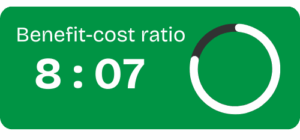
Benefit-cost ratio: 8.07

For every dollar spent, the community receives over eight times that value in social benefits.

Headline results

This showcases the overall costs and net benefit of our program. The total cost is automatically adjusted to account for optimism bias and opportunity cost.

Participants

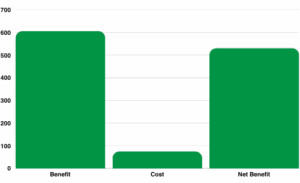
The net benefit was $531 per participant. This benefit is a combined benefit of primary benefit (value to the individuals improved health and wellbeing) and secondary benefit (the wider value to society).

Total benefits by Outcomes

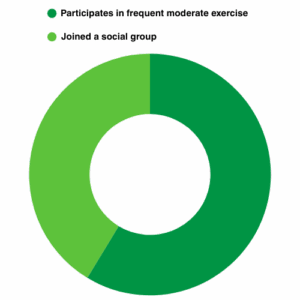
This showcases the breakdown in value across the two outcomes (participation in physical activity and social connection).

Participation in frequent moderate physical activity contributed to over 50% of the overall outcome benefits, emphasising the critical role of physical exercise in the program’s social value.

Division of Primary and Secondary Benefits

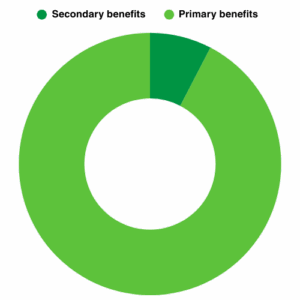
This graph showcases the breakdown of the total benefit into primary benefit (value to the individuals improved health and wellbeing) and secondary benefit (the wider value to society). In this case, the primary benefit is significantly higher than the secondary benefit.

What’s Next?

By utilising ASVB, we now have a robust framework for understanding the social impact of our programs. This tool enhances our ability to evaluate and report on outcomes, providing transparency and accountability in our work. Additionally, ASVB will play a key role in future funding applications, allowing us to clearly demonstrate the potential impact of our programs.

As we move forward, this evidence-based approach will support our ongoing efforts to secure resources, enabling us to expand initiatives that foster a more active, healthy, and connected Gippsland.

Need more information?

GippSport acknowledges the Traditional Custodians of the land on which we live and work, The Bunurong Peoples, Gunaikurnai Peoples and other traditional owner groups of the Gippsland/East Gippsland Region.  We recognise their ongoing connection to the land, waters and community, and pay our respects to Elders past, present and emerging and the ongoing living culture of Aboriginal & Torres Strait Islander people.

GippSport is committed to making a positive contribution to the wellbeing of Aboriginal and Torres Strait Islander people and working in solidarity towards reconciliation.

GippSport – Gippsland Sports Assembly Inc.
PO Box 741, Traralgon, VIC, Australia 3844
Traralgon Sports Stadium, Catterick Cres, Traralgon